

Upgrading your home’s lighting isn’t just about visibility—it’s about creating ambiance, improving functionality, and improving design. According to the 2021 Houzz Survey, 47% of homeowners upgrade their lighting during kitchen renovations, with recessed lights among the most popular choices. This growing preference reflects a shift toward cleaner, more modern interiors where lighting plays both a practical and aesthetic role.
But how many recessed lights do you need for your space? That depends on several factors, including room size, ceiling height, and how bright you want the space to feel. A recessed lighting calculator can help eliminate guesswork, ensuring an even light distribution and optimal lumen output for your needs. Whether you're lighting a kitchen, hallway, or living room, calculating the correct number of fixtures is essential for avoiding shadows, glare, or over-lighting. In this guide, we’ll walk you through determining the ideal setup for your space.
Why Recessed Lighting?
Recessed lighting continues to gain popularity among homeowners looking for a sleek, functional upgrade. These fixtures offer an unobtrusive way to illuminate spaces without bulky hardware or visible cords. Their ability to deliver focused, ambient, or task lighting makes them suitable for almost any room, especially kitchens, where precise lighting is essential. The 2021 Houzz Survey found that 47% of homeowners upgrade their lighting during kitchen renovations, with recessed lights emerging as a go-to choice.
This growing interest is reflected in the market itself. According to Fortune Business Insights, the global recessed lighting market was valued at $13.1 billion in 2022 and is expected to reach $18.9 billion by 2030, increasing at a CAGR of 4.7%. This steady climb highlights an apparent demand for energy-efficient, space-saving lighting solutions that align with modern home design. Recessed lighting offers a balanced mix of practicality, style, and long-term value.
Key Concepts: It helps to know a few essential terms before
Before calculating how many fixtures you need for recessed lighting, consider.
Recessed Light: Can lights or downlights are ceiling fixtures installed above the ceiling line, offering discreet illumination.
Lumen: This measures light output or brightness. More the lumen rating, the better the light. For example, a 60-watt incandescent light produces around 800 lumens.
Foot-candle: This unit measures light intensity in a given area. Different rooms require different levels—for instance, kitchens and workspaces benefit from higher foot-candle levels than bedrooms or hallways.
Understanding these concepts is crucial to planning your lighting layout. Proper lumen output and spacing ensure even coverage and minimize dark spots, making your home feel balanced and inviting.
Two Methods to Calculate Recessed Lights
Determining how many recessed lights you need can feel overwhelming, but it doesn’t have to be. Whether you're lighting a kitchen, living room, or workspace, the right approach ensures balanced ambient lighting, proper task lighting, and adequate accent lighting without over- or under-lighting the space. Two reliable methods are commonly used: the Lumen (Foot-Candle) Method, which focuses on brightness requirements, and the Spacing Method, which uses your ceiling height to determine layout. These approaches work for traditional can fixtures and newer canless recessed lights, like wafer lights, which are increasingly popular due to their slim profiles. Understanding both methods can help you make smarter lighting decisions tailored to your space and purpose.
Method 1: Lumen (Foot-Candle) Method
This method starts by determining how much light you need in a room, using foot-candle recommendations based on room type and function. A foot-candle measures the brightness of one lumen per square foot. For example, living rooms typically require 10–20 foot-candles, while kitchens may need 30–50, especially for task lighting around counters. Multiply your room’s square footage by the recommended foot-candle value to find your target lumen output. Then divide that number by the lumen rating of your chosen fixture.
Let’s say your kitchen is 150 sq. ft. and you aim for 40 foot-candles:
150 x 40 = 6,000 lumens needed.
If your wafer lights emit 800 lumens each, you’ll need about eight fixtures (6,000 ÷ 800).
This method adequately meets both ambient and task lighting, offering a calculated approach suited for areas with specific brightness needs.
Method 2: Spacing Method
The Spacing Method relies on the room’s ceiling height to determine how far apart your recessed fixtures should be. A general rule is to space lights apart equal to half the ceiling height. For example, if the ceiling is 8 feet high, recessed lights should be roughly 4 feet apart. This rule applies to creating even ambient lighting, especially in large open rooms like living areas or offices.
Start by measuring the room’s dimensions and ceiling height, then map out a grid. Place your canless recessed or wafer lights so the light overlaps slightly but doesn’t cause glare or hot spots. Keep lights at least 2–3 feet from walls to avoid harsh wall shadows and over-illumination.
This method is ideal for establishing uniform coverage and works well when layered with directional lighting for accent or task areas. It’s simple, visual, and helps avoid guesswork in layout planning.
Room-by-Room Recommendations
Different rooms in your home serve different purposes, and your recessed lighting layout should reflect that. Below are general guidelines for how many fixtures you may need and how to place them in key areas of the home. These recommendations assume 8-foot ceilings and the use of standard wafer lights or candles, recessed lights emitting around 800 lumens each.
Kitchen
Kitchens require higher light levels due to the focus on task lighting. Plan for 35–50 foot-candles, depending on how much prep work is done. A typical 12x12 kitchen may need 6 to 8 recessed lights, spaced 4 feet apart in a grid, with extra fixtures placed above work areas like the stove or sink. Consider dimmers to adjust light levels for different tasks or moods.
Living Room
The living room benefits from flexible ambient lighting, with options to layer accent lighting over art or shelves. A 16x20 living room usually requires 8 to 10 recessed lights, spaced 5 feet apart. To reduce glare, avoid placing fixtures directly above the television. For a cozier vibe, supplement with lamps or wall sconces.
Bedroom
Bedrooms typically need softer ambient lighting with optional focused lighting for reading or dressing. A 12x14 bedroom often does well with 4 to 6 recessed lights. Place lights evenly spaced in a rectangular layout, leaving room for ceiling fans or chandeliers in the center.
Bathroom
Bathrooms need bright, clear lighting, especially around mirrors. A small 8x10 bathroom typically needs four recessed lights: two for overall illumination and two closer to the vanity for task lighting. For safety and durability, use wet-rated can-less recessed lights near showers or tubs.
H2: Advanced Considerations
Once you've covered the basics, it’s time to fine-tune your lighting plan by factoring in architectural details, fixture technology, and lighting controls. These advanced elements can significantly impact your recessed lighting setup's overall effect and efficiency.
Ceiling Height & Type
The height and structure of your ceiling directly influence your lighting layout. For standard flat ceilings under 9 feet, spacing lights at half the ceiling height works well. But vaulted or high ceilings demand adjustments. In rooms with ceilings above 10 feet, you'll need higher lumen output fixtures or tighter spacing to maintain adequate brightness. For sloped ceilings, angle-adjustable recessed lights or gimbals help direct light downward, avoiding shadows. Always match fixture type and spacing to the ceiling style for balanced, functional light across the room.
Fixture Types
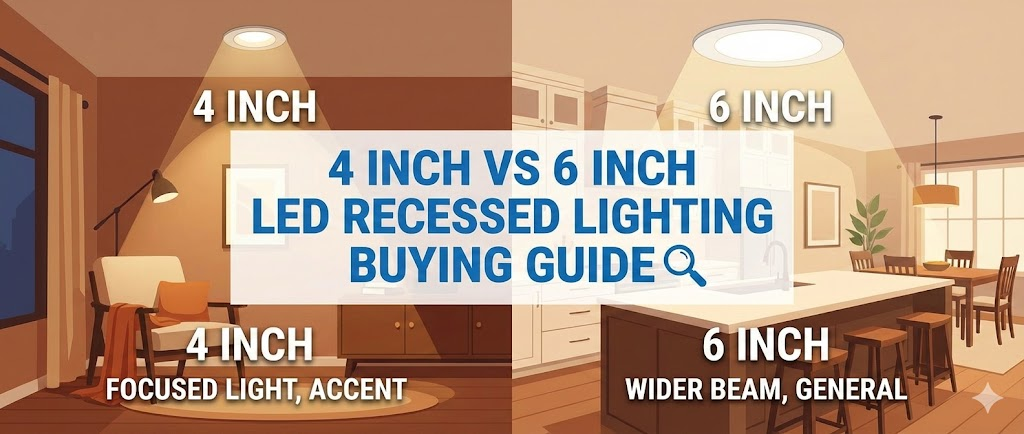
Choosing the right fixture type matters as much as placement. Canless recessed lights, often wafer lights, are ultra-thin and ideal for tight ceiling spaces or renovations without attic access. Traditional cans offer more depth and flexibility with trim options such as baffle, reflector, or adjustable trims. Additionally, beam angles affect how wide the light spreads—narrow beams work well for accent lighting, while wider beams are better for general illumination. Matching fixture types with room needs ensures proper light distribution and visual consistency.
Smart & Warm-Dim LEDs
Modern recessed lighting goes beyond on-off functionality. Bright LEDs offer app or voice control, scheduling, and scene settings, perfect for multi-purpose rooms. Meanwhile, warm-dim LEDs adjust color temperature as they dim, mimicking incandescent light by shifting from cool to warm tones. This adds ambiance for evening use without needing extra fixtures. Both options work well with can-less recessed lights and uplift overall comfort, energy efficiency, and lighting versatility in your home.
Common Mistakes & Troubleshooting
Even with good intentions, poor planning can result in lighting that feels off. One common mistake is overcrowding—adding too many fixtures causes glare and disrupts the room’s balance. On the flip side, dark spots occur when lights are spaced too far apart or beam angles are too narrow. Uneven lighting zones can leave some areas harshly lit while others feel dim and uninviting.
Another issue is strobing, typically caused by incompatible dimmer switches or low-quality LEDs. If you’re using retrofit recessed lights in older ceiling cans, ensure the bulbs and housing are compatible to prevent flicker. Always plan your setup using a layout diagram, test fixtures with your dimmer switch, and use high-quality, energy-efficient lighting for smooth, consistent output. Layer your lighting—task, ambient, and accent—for flexibility and visual harmony. Addressing these issues before installation can save you from frustration and added costs later.
Tools & Calculators
Using an online tool can simplify the planning process and ensure your recessed lighting setup meets the needs of your space. A recessed lighting calculator considers room size, ceiling height, and desired brightness (in foot-candles) to help you determine fixture count and placement. Many calculators also allow you to define lighting zones for kitchens, living rooms, or bedrooms, ensuring appropriate light levels for different tasks.
Some helpful tools include:
- Lowe’s Recessed Lighting Calculator
- RecessedLighting.com Calculator
- Lumens Needed Calculator by Omni
These tools can generate a layout diagram, offer spacing suggestions, and guide the selection of retrofit recessed or modern wafer lights. Paired with thoughtful design, they support an efficient and balanced lighting plan using energy-efficient lighting throughout your home.
Frequently Asked Questions (FAQ)
1. How many recessed lights do I need for a 12x12 room?
To calculate, multiply 144 sq ft × 20 foot-candles (bedroom) = 2,880 lumens. Divide by 800 lumens per fixture = 3.6- round up to 4 lights. For kitchens: 144 × 40 = 5,760 lumens ÷ 800 = 7.2- round up to 8 lights.
2. Is it better to have 4 or 6 recessed lights in a bedroom?
Four recessed lights provide sufficient ambient lighting for small bedrooms (up to 10×10 ft). In medium or larger bedrooms (12×12 ft), or rooms with higher ceilings, six lights offer better light distribution and flexibility for creating lighting zones like reading or dressing areas.
3. How many recessed lights for a 20x20 room?
A 400 sq ft living room × 20 foot-candles = 8,000 lumens → 10 lights (800 lm each). For a kitchen: 400 × 40 ft = 16,000 lumens → 20 lights. A typical 20×20 living room uses 9–12 lights in a 3×3 or 3×4 grid layout.
4. How do you calculate the number of recessed lights needed?
Use the Lumen Method: room area × foot-candles = total lumens ÷ lumens per fixture. Or try the Spacing Method: divide the ceiling height by 2 for spacing, place fixtures in a grid, and keep them half that distance from the walls. Add layers for task or accent lighting.